Trainer · Neonatal resuscitation
Practice the first minute before it counts.
The learner resuscitates a simulated newborn at a radiant warmer, on one Meta Quest 3, from the first breath to the last step, and sees a score.
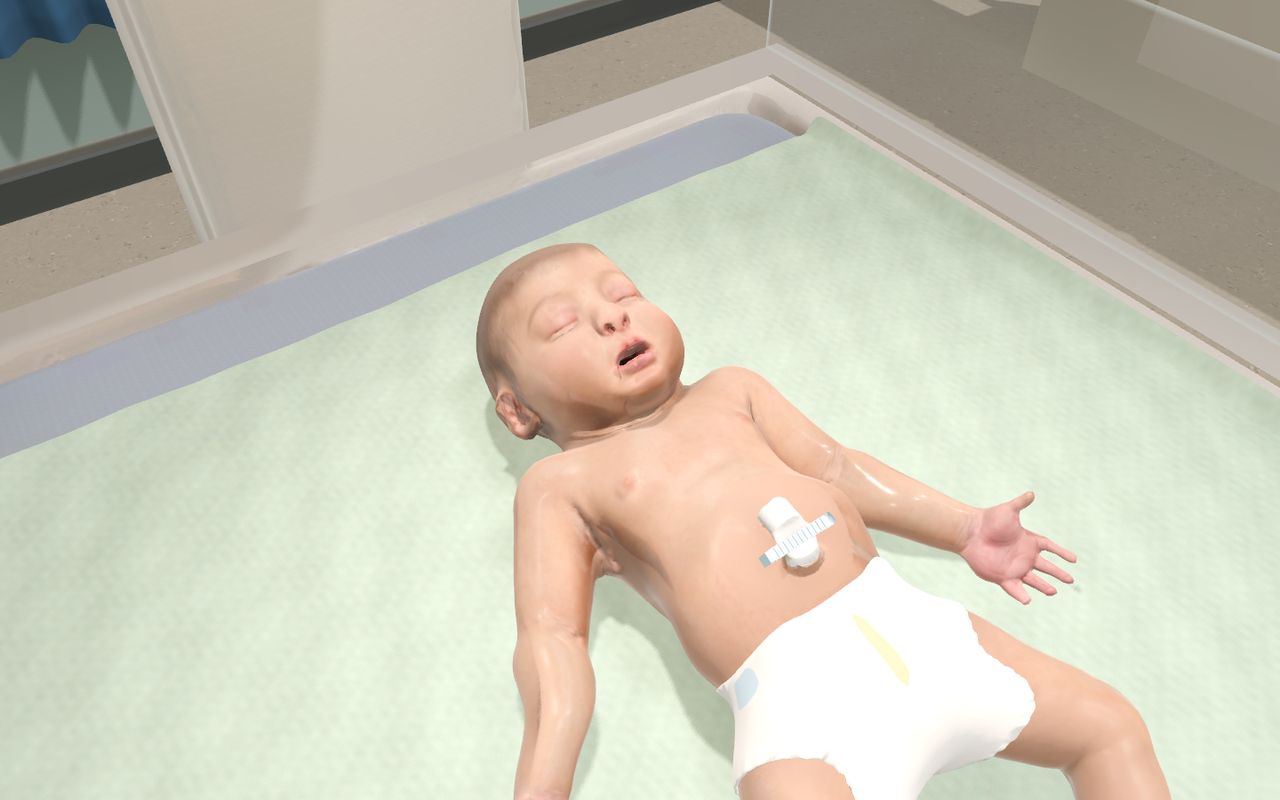
One case in the trainer’s virtual room, a frame for every second.
- Born blue, floppy and not breathing. The clock starts.
- Mask on: breaths from the first minute.
- The monitor answers: the heart rate climbs toward 100.
- Past 100: mask off, pink, breathing and crying.
Four moments from one case in the trainer’s virtual room.
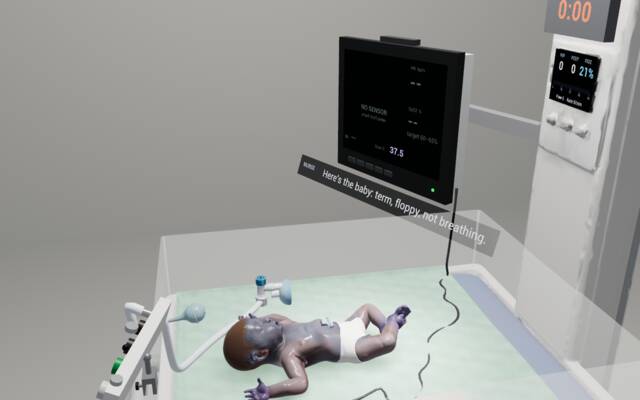
0:00 Born blue, floppy and not breathing. The clock starts. 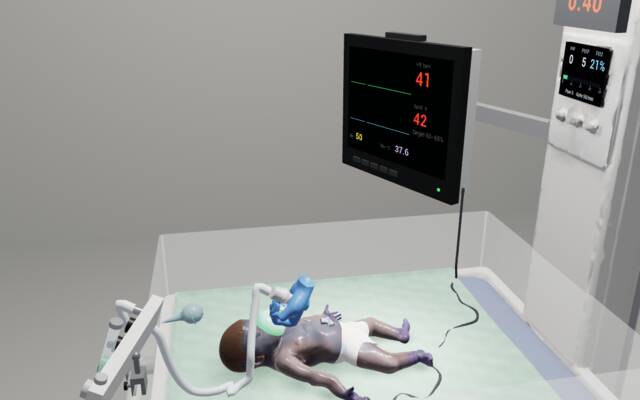
0:40 Mask on: breaths from the first minute. 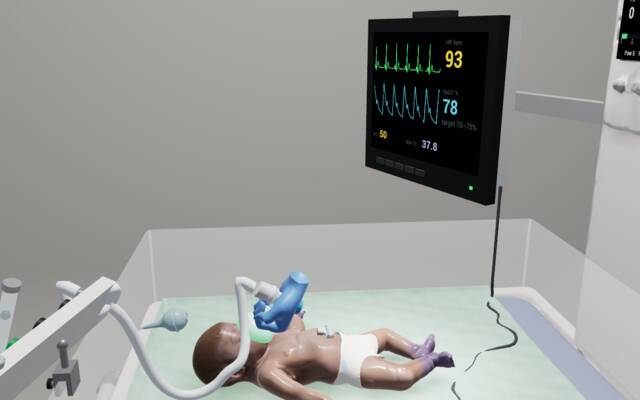
2:18 The monitor answers: the heart rate climbs toward 100. 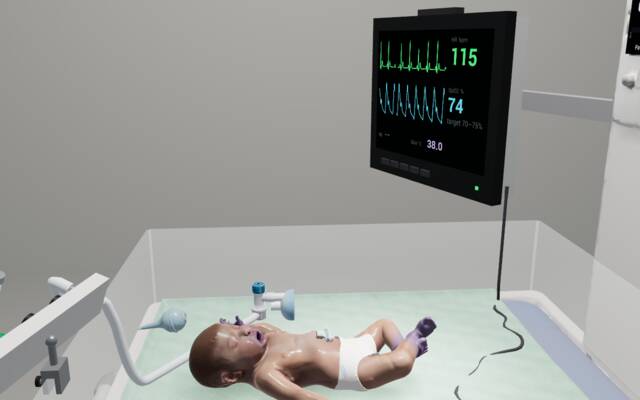
2:44 Past 100: mask off, pink, breathing and crying.
1:00
A newborn who is not breathing should be ventilated within the first minute of birth.
AAP, Textbook of Neonatal Resuscitation, 9th ed., 2025, pp. 2, 12, 62.
A newborn’s first minute.
- 01
The baby is born
Blue, limp, not breathing. The clock starts.
- 02
You act
Dry, listen, give breaths. The baby and the monitor respond.
- 03
You see your score
Every step timed, every late step shown.
1 in 20 newborns needs help to breathe
Out of every 100 newborns
- 5need breaths given with a mask, within the first minute
- 10start breathing after drying and rubbing
- 85breathe on their own within 30 seconds
1 to 3 in every 1,000 need chest compressions or drugs: too rare to keep sharp.
Every 30 seconds of delay in giving breaths adds 16% to the risk of death or a long hospital stay, in a study of 5,845 births at one hospital.
AAP, Textbook of Neonatal Resuscitation, 9th ed., 2025, pp. 2, 12, 62. Ersdal et al., Resuscitation, 2012: 5,845 births at one hospital in Tanzania.
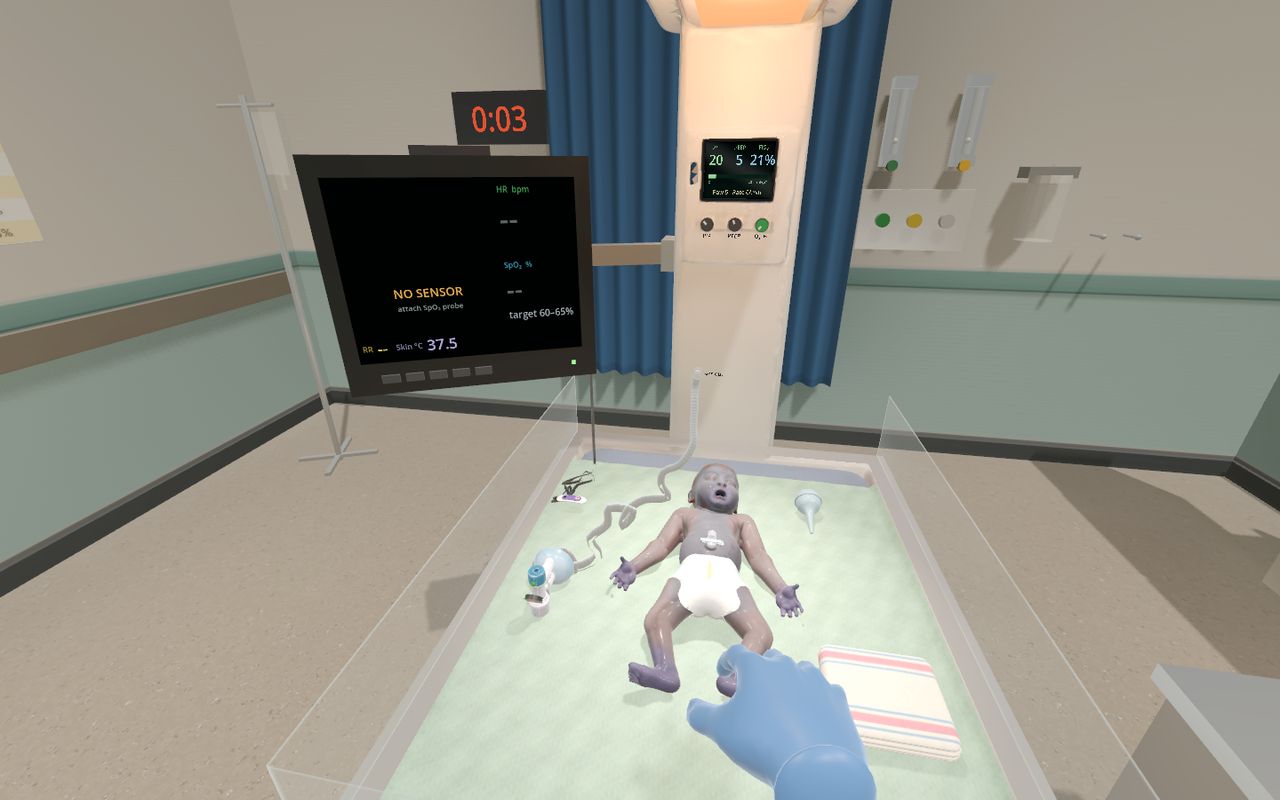
A newborn that looks like one
A practitioner first assesses a newborn by its tone, breathing and cry. In the trainer, all three respond to the care given, and so does its color.
A training tool, not a medical device. Its physiology is a teaching approximation.